Case Studies
This page shows how I approach real operational challenges—through learning design, enablement systems, and customer experience strategy. Each case study walks through the problem, the approach I took, and the outcomes achieved, with a focus on how structure, clarity, and capability-building drive measurable performance improvement.
Improving Customer Satisfaction Through Onboarding and Coaching Redesign
Customer satisfaction was inconsistent and below target. Performance varied widely across team members, escalations were frequent, and service quality depended heavily on individual experience rather than a reliable system. Onboarding, coaching, and knowledge access were not aligned, which made it difficult for employees to build confidence and deliver consistent outcomes.
The Challenge
I reframed the issue from a performance problem to a system design gap. I redesigned onboarding as a structured capability-building experience, introduced consistent coaching frameworks, and improved access to knowledge so employees could make decisions with more clarity. Instead of focusing on compliance, I focused on building confidence, consistency, and shared understanding across the team.
My Approach
The Result
Customer satisfaction improved from 86% to 97%. Performance became more consistent across employees, and service quality was no longer dependent on individual experience levels. The improvements were sustained because they were built into the system, not driven by short-term effort.
Capabilities This Project Reflects
Onboarding and enablement system design
Coaching framework development
Customer experience performance improvement
Knowledge accessibility and usability design
Cross-functional operational alignment
Capability-based performance strategy
Reducing Escalations by Improving Decision Clarity
Escalations to supervisors were frequent, with frontline employees seeking guidance multiple times per day. This slowed resolution times, created bottlenecks, and reduced confidence at the frontline. The root issue was not lack of effort, but lack of clarity around decision boundaries and expectations.
The Challenge
I analyzed escalation patterns to identify where uncertainty was driving behavior. I introduced clearer decision-making frameworks, defined boundaries for ownership, and redesigned training and coaching to reinforce confident judgment. I also aligned supervisors on how to support autonomy rather than act as default escalation points.
My Approach
The Result
Supervisor requests decreased from approximately 5 per day to 1 per day. Frontline employees became more confident in their decisions, resolution times improved, and the overall flow of work became more efficient without increasing risk.
Capabilities This Project Reflects
Decision framework design
Escalation reduction strategy
Frontline empowerment and autonomy development
Coaching and behavior reinforcement
Operational friction analysis
Risk-aware performance improvement
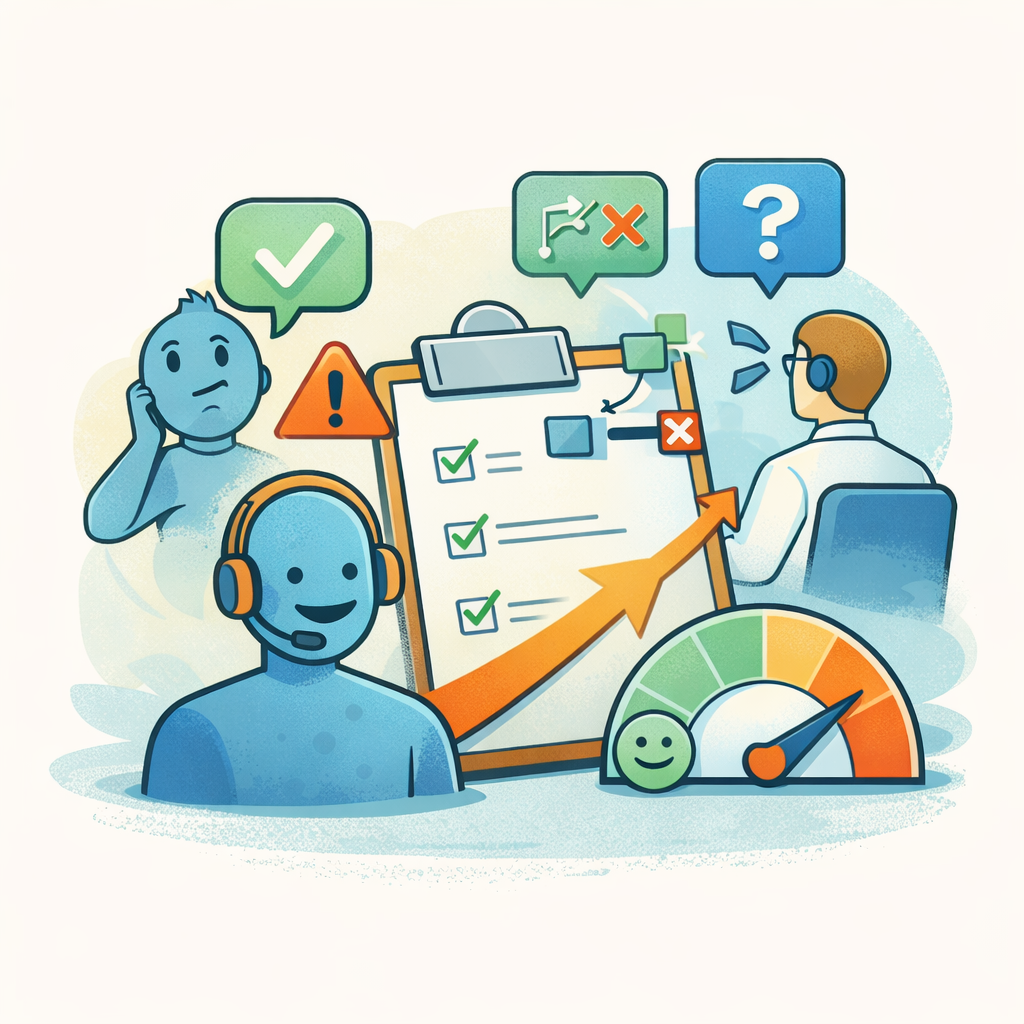
Redesigning Onboarding to Reduce Time to Proficiency
Onboarding timelines were long, and new hires were not consistently reaching proficiency at the same pace. Training focused heavily on information delivery, which led to gaps in real-world application and delayed readiness.
The Challenge
I redesigned onboarding as a structured progression toward capability rather than a sequence of content delivery. I introduced milestone-based learning, built in applied practice, and aligned training with actual job scenarios. I also added reinforcement points to ensure learning translated into performance.
My Approach
The Result
Onboarding time was reduced from 6 weeks to 4 weeks. New hires reached proficiency faster and with greater consistency, and training effectiveness became more measurable and predictable.
Capabilities This Project Reflects
Instructional design and course architecture
Workforce capability development
Time-to-proficiency optimization
Applied learning and scenario design
Learning-to-performance alignment
Training program measurement

Building Knowledge Infrastructure for Consistency at Scale
Knowledge was fragmented across the organization, leading to inconsistent execution, longer onboarding times, and reliance on informal knowledge sharing. This created variability in performance and increased the risk of errors.
The Challenge
I built a centralized knowledge system with standardized templates, clear ownership, and structured organization. I focused on making information easy to access and use in real time, rather than simply documenting it. The goal was to turn knowledge into an operational tool, not just a reference.
My Approach
The Result
Execution became more consistent, onboarding improved, and employees were able to find and apply information more quickly. The organization reduced variability and improved reliability without increasing oversight.
Capabilities This Project Reflects
Knowledge management system design
Documentation governance and standardization
Process clarity and simplification
Operational scalability design
Learning support infrastructure
Execution consistency improvement

Leading Operational Stability During Change
During a post-acquisition transition, the organization faced shifting structures, evolving workflows, and uncertainty across teams. There was a risk of service disruption, reduced employee confidence, and misalignment between departments.
The Challenge
I focused on stabilizing operations before optimizing them. I assessed capability gaps, implemented targeted training, clarified workflows, and maintained consistent communication. I worked cross-functionally to ensure alignment while supporting employees through the transition with clear expectations and practical guidance.
My Approach
The Result
Service continuity was maintained during a period of significant change. Employees adapted more quickly, cross-functional coordination improved, and the organization was able to stabilize before moving into longer-term optimization.
Capabilities This Project Reflects
Change management and operational stabilization
Cross-functional coordination
Workforce capability assessment
Targeted training and enablement
Communication and alignment strategy
Service continuity planning